

Ceramic 3D Printing Services
Domestic standard contributor and full-chain solution provider in the field of stereolithography-based ceramic additive manufacturing. We deliver end-to-end ceramic parts—from single custom orders to mass production—through a comprehensive equipment portfolio spanning lab validation to industrial-scale applications, supported by our proprietary slurry systems and debinding/sintering processes.
Technical Overview
Shanghai Shuzao uses advanced SLA ceramic 3D printing technology. Ceramic powder is mixed with photopolymer resin to create a ceramic slurry, which is precisely cured by UV laser and then defatted and sintered to produce dense ceramic parts.
This technology overcomes the limitations of traditional ceramic forming processes, enabling direct manufacturing of high-precision ceramic parts with complex geometries, micro-pores, thin walls, and internal flow channels. It is widely used in semiconductor, electronics & electrical, aerospace, and chemical energy sectors.
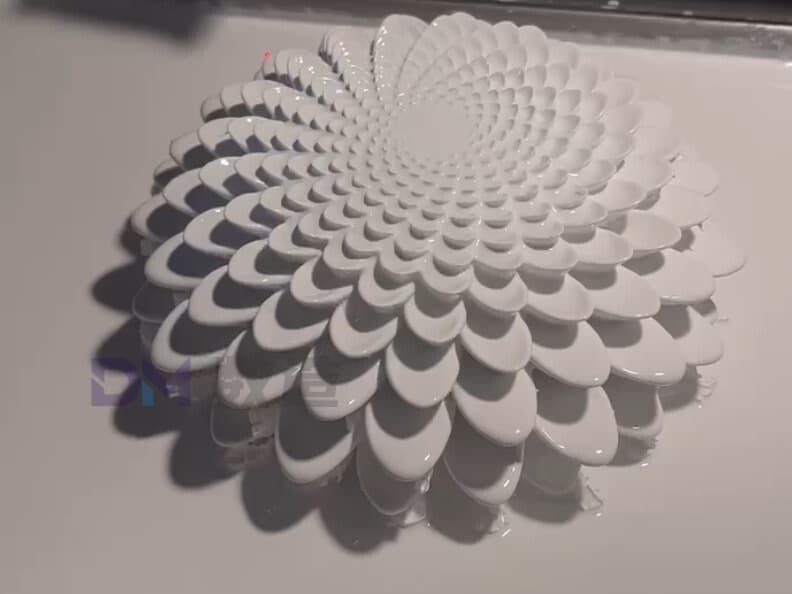
Available ceramic materials
Offer a range of high-performance ceramic materials to meet diverse application needs.

Zirconia Ceramic (ZrO₂)
Material Properties:
Typical Applications:

Alumina Ceramic (Al₂O₃)
Material Properties:
Typical Applications:

Silicon Carbide Ceramic (SiC)
Material Properties:
Typical Applications:

Hydroxyapatite (HA)
Material Properties:
Typical Applications:
Print Case
Successful Applications of Ceramic 3D Printing Across Multiple Industries
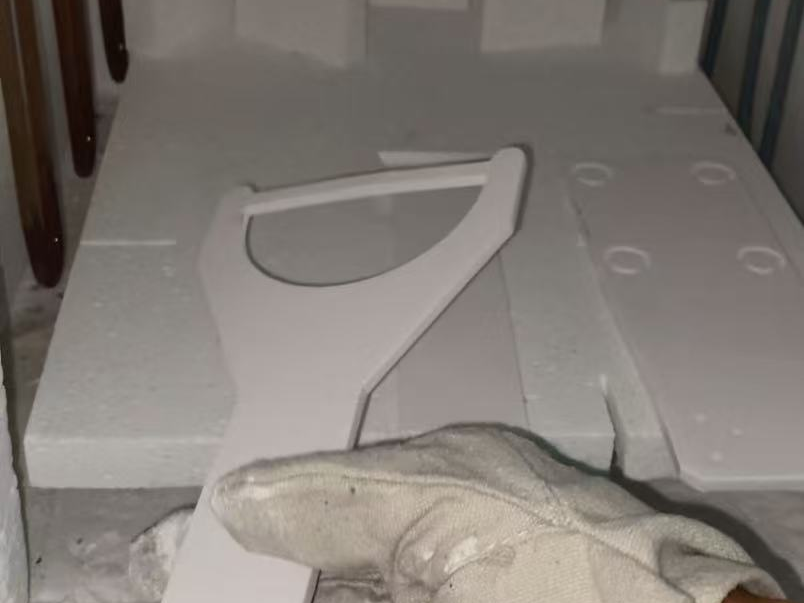
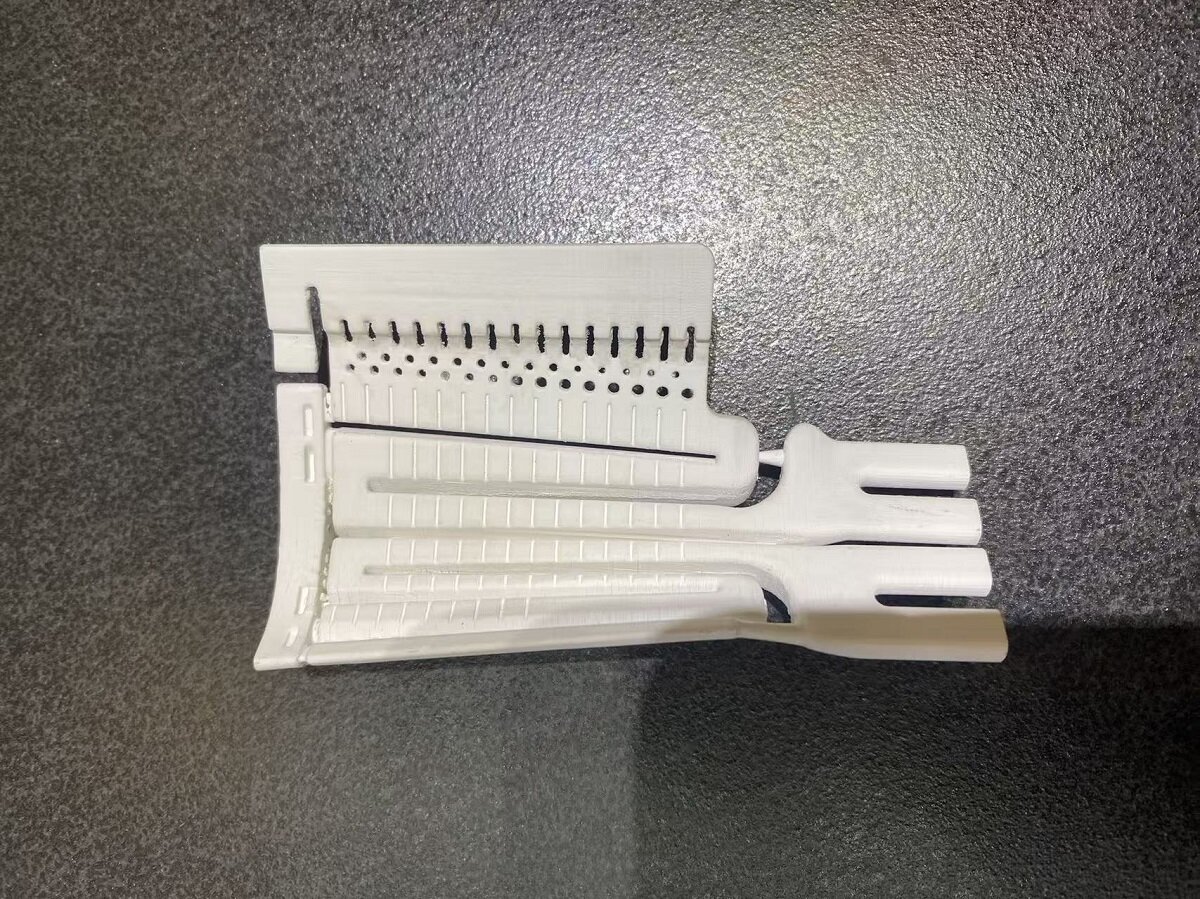
Ceramic Fingers for the Semiconductor Industry
semiconductorTraditional cold isostatic pressing (CIP) processes have lead times exceeding 6 weeks, long design validation cycles, and high mold costs.
Utilize the 3DCR series ceramic 3D printer with high-purity alumina slurry (Al₂O₃ purity ≥ 99.5%) to directly fabricate complex internal airflow channel structures.
Lead time reduced from 6 weeks to 12 days; suction test passed. Customer feedback: "Faster and internal airflow channels meet functional requirements."
Ceramic Cores for Aero Engines
AerospaceTraditional manufacturing of complex internal cooling channels in turbine blades involves laborious processes, with lead times ranging from 4 to 6 weeks and mold costs reaching $20,000–$30,000.
SLA photopolymerization ceramic 3D printing directly forms ceramic cores without mold making; uses alumina ceramic slurry with a temperature resistance of 1600°C.
Development cycle shortened from 6 weeks to 10 days; unit cost reduced from 5000 yuan to 1800 yuan, a 64% decrease.

Special-shaped Ceramic Terminal Blocks
New EnergyEV battery packs and PV inverters require high-temperature-resistant, high-insulation custom ceramic terminal blocks; traditional dry pressing can only produce simple shapes.
SLA photopolymerization ceramic 3D printing uses alumina-based slurry (Al₂O₃ content ≥85%) to directly form complex curved surfaces, micro-pores, and precision features like slots.
Reduced the development cycle for custom ceramic terminal blocks from 3-6 months to 2 weeks, and lowered unit cost from 500 yuan to 150 yuan.
Technical Advantages
3D printing technology delivers a revolutionary breakthrough compared to traditional ceramic manufacturing processes.
High-precision molding
Layer thickness: 0.05mm; dimensional accuracy: ±0.1%; capable of forming 3D micro-holes as thin as 0.3mm and complex structures with walls as thin as 0.5mm
High-temperature resistance
Sintered ceramic components withstand temperatures up to 1700°C, making them ideal for extreme high-temperature applications.
Excellent electrical performance
Dielectric strength ≥ 18kV/mm, low dielectric constant; ideal for electronic and electrical applications.
High mechanical strength
Bending strength ≥ 380MPa, hardness HRA ≥ 85, excellent wear resistance, and long service life
Biocompatibility
Zirconia and hydroxyapatite are certified biocompatible for direct use in medical implants.
Corrosion Resistance
Resistant to acid and alkali corrosion; ideal for harsh environments such as chemical processing and marine applications.
Quality Metrics
Rigorous quality control system ensures superior performance for every ceramic component.
Application Areas
Ceramic 3D printing technology is widely used across multiple high-end manufacturing sectors.
Semiconductor Industry
Leverage ceramics' high purity, heat resistance, and corrosion resistance to meet stringent semiconductor manufacturing requirements.
Electrical and Electronic
Leverages ceramic's high insulation and heat resistance for high-voltage, high-temperature electrical environments.
Aerospace
Leverage ceramics' lightweight, high-temperature resistance, and thermal shock resistance to meet extreme operating conditions.
Chemical Energy
Leverages ceramic's acid and alkali corrosion resistance; ideal for chemical, petroleum, and new energy sectors.
Service Process
Standardized six-step service process to ensure efficient, high-quality project delivery.
Requirement Assessment
Understand application scenarios, performance requirements, and accuracy standards to recommend suitable ceramic materials and process solutions.
Design Optimization
Optimize 3D model design for ceramic process characteristics to ensure printability and final performance.
Print Formed
Utilizes SLA photopolymerization ceramic 3D printing technology to precisely form complex green body structures.
defatted sintering
Professional sintering furnace high-temperature treatment to remove resin carriers and produce dense ceramic parts.
Post-processing
Perform post-processing such as grinding, polishing, and metallization as needed to meet final precision requirements.
Quality Inspection
Dimensional inspection, performance testing, and non-destructive testing to ensure product quality meets standards.
Professional Team and Equipment
Shanghai Shuzao boasts a professional team with over 10 years of experience in ceramic material R&D. Equipped with multiple industrial-grade ceramic 3D printers, high-temperature sintering furnaces, and precision testing instruments, we provide one-stop services from design optimization to final delivery.

Technical Comparison
Ceramic 3D Printing vs. Traditional Methods: A Comprehensive Performance Comparison
| Comparison Criteria | Ceramic 3D Printing | Conventional Injection Molding | CNC Machining |
|---|---|---|---|
| Complex Structure | Seamlessly molded, limitless. | Limited by draft angle | Tool accessibility limitations |
| Development Cycle | 1-7 days (no mold required) | 30-60 days (mold required) | 7-15 days |
| Small-batch cost | Low (No Mold Fee) | High (high mold cost) | Medium |
| Material Utilization Rate | ≥95% | 60-70% | 30-50% |
| Minimum Wall Thickness | 0.5mm | 1.0mm | 0.8mm |
| Surface Quality | Ra ≤ 1.6 μm (as-sintered) | Ra ≤ 0.8 μm | Ra ≤ 0.4 μm |
| Customization flexibility | Very High (varies by item) | Low (Mold Fixed) | Medium |
Success Stories
Successful Applications of Ceramic 3D Printing Across Multiple Industries

Custom Dental Zirconia Crowns
Semiconductor IndustryTraditional craftsmanship struggles to achieve precise, personalized crown matching and requires a long production cycle.
Fabricate personalized crowns using zirconia ceramic 3D printing, directly from patient intraoral scan data.
Accuracy ±0.05mm; production time reduced from 7 to 2 days; patient satisfaction increased by 40%

Aerospace Ceramic Sensor Window
AerospaceTransparent, heat-resistant sensor protection windows for high-temperature environments come at a high cost with traditional manufacturing.
Manufacture complex-curve sensor windows from aluminum oxide ceramic via 3D printing in a single piece, eliminating the need for拼接.
Temperature resistance: 1600°C, Light transmittance ≥85%, Cost reduced by 50%, Weight reduced by 30%

Semiconductor Wafer Carrier Manufacturing
Electrical and ElectronicSilicon carbide wafer carriers require ultra-high purity and precise dimensions, making traditional machining challenging.
Utilize silicon carbide ceramic 3D printing to directly form complex internal flow channel structures.
Purity ≥99.9%, dimensional accuracy ±0.1%, service life extended 3x

Customized Orthopedic Implants
Semiconductor IndustrySignificant variability in patient bone anatomy results in low compatibility with standardized implants.
Personalized Hydroxyapatite Bone Repair Scaffold Designed from CT Data with Precision 3D Printing
60% increase in osseointegration rate, 40% shorter surgery time, 30% reduced recovery period
Get Ceramic 3D Printing Solutions
Submit your requirements, and our ceramic technology experts will provide you with a customized solution and detailed quote within 24 hours.