

3D-Printed Robot Vacuum – Rapid Form Factor Validation with SLA 3D Printing

SLA stereolithography 3D printing accurately reproduces the robotic vacuum cleaner's sleek body, tiny buttons, air vents, charging contacts, and other fine details.
Industry Background
Robot vacuum exteriors iterate frequently, requiring validation of aerodynamic shells, button layouts, sensor apertures, and charging contacts for each generation. Traditional CNC prototypes cost 2000-5000 per unit with a lead time of 7-10 days; mold development runs 30-50K.
Solutions
SLA resin 3D printing precisely reproduces the streamlined body, small buttons, ventilation grilles, and charging contacts of robot vacuums. With a layer thickness of 0.1mm, it ensures high surface accuracy. Supports 1:1 for full-body or multi-part printing, completing the entire workflow from design to physical prototype in 48 hours.
Achieve Results
Single prototype cost reduced to 300-800 CNY, lead time shortened from 7-10 days to 24-48 hours; complete 3 design iterations before mold opening, saving over 50 K in mold risk costs.
Recommended Models
3DSL-360/3DSL-600
Related Articles
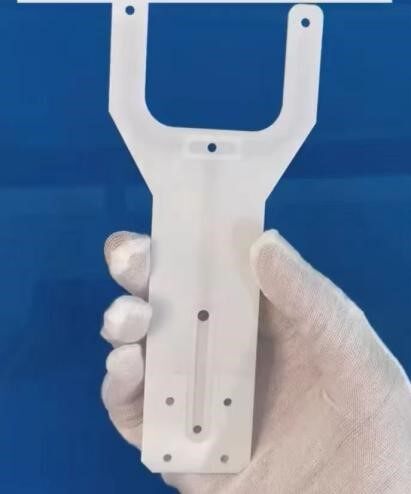
Say Goodbye to "Top-and-Bottom Gluing": How UV-Curing 3D Printing Enables Monolithic Internal Channels in Ceramic Robotic Arms
With ceramic 3D printing via stereolithography, internal air channels in the robotic arm are molded integrally with the body, eliminating sealing and precision issues caused by adhesive bonding.
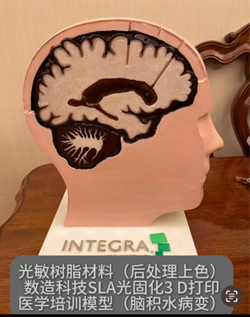
3D Printing in Healthcare: Preoperative Planning and Customized Devices
SLA-based 3D printing can generate bone and vascular models from patient CT/MRI data 1:1 for preoperative planning and team collaboration.
3D Printing-Based SLA Rapid Precision Casting Technology: Quick Cast
Quick Cast, a rapid precision casting technology based on SLA, is an improved lost-pattern casting method invented by 3D Systems in the United States in the early 201990s.